
Choosing the Right Switch for Every Room: Home Electrical Tips
How to Choose the Right Switch for Every Room in Your Home
Most home renovation conversations revolve around furniture, paint, and flooring. The humble wall switch rarely makes the list, yet it’s one of the few components you physically touch in nearly every room, every single day. Choosing the right switch for each room affects far more than whether a light turns on — it shapes convenience, safety, energy use, and even how polished a space feels at eye level, which is exactly where switches sit on nearly every wall.
This guide breaks down the main switch types available today, how to match them to specific rooms, and the safety and efficiency factors that are easy to overlook until something goes wrong.
Why the Switch Itself Deserves More Attention
It’s easy to treat a switch as a purely functional afterthought — something the electrician handles during a build and nobody thinks about again. In practice, switch choice quietly affects daily life in a few concrete ways.
- Convenience: a poorly placed or overly complicated switch becomes a small daily annoyance that adds up over years of use.
- Safety: outdated or incompatible switches in humid rooms like bathrooms and kitchens carry real electrical risk.
- Energy use: dimmers, motion sensors, and scheduled smart switches can meaningfully reduce unnecessary electricity consumption.
- Aesthetics: because switches sit at eye level on nearly every wall, an outdated or mismatched plate can pull attention away from an otherwise well-designed room.
None of these factors are dramatic on their own, but together they explain why switch selection has become a genuine part of interior planning rather than a purely electrical decision.
The Main Types of Switches
Before matching switches to specific rooms, it helps to understand what’s actually available and how each type performs in real households.
Toggle Switches
The traditional up-and-down lever switch is still common, especially in older homes or budget-conscious renovations.
Strengths: simple, durable, inexpensive, and easy for any electrician to replace. Drawbacks: limited design variety, and generally not compatible with advanced smart or dimming systems without a full swap.
Rocker Switches
Rocker switches use a flat panel that tilts rather than a protruding lever, and they’ve become the default choice in most modern renovations.
Strengths: cleaner appearance, easier to operate (useful for anyone with limited hand mobility), and widely compatible with dimmer hardware. Drawbacks: typically cost a bit more than basic toggle switches, though the price gap has narrowed considerably in recent years.
Dimmer Switches
Dimmers adjust light intensity rather than simply switching a circuit on or off, which gives a room far more flexibility across different times of day.
Strengths: adaptable atmosphere, potential energy savings at lower brightness levels, and strong compatibility with LED bulbs rated for dimming. Drawbacks: not every bulb is dimmer-compatible — older incandescent or non-dimmable LED bulbs can flicker or hum when paired with the wrong dimmer.
Smart Switches
Smart switches connect to home Wi-Fi and integrate with apps, voice assistants, and automation routines.
Strengths: remote control, scheduling, energy tracking, and compatibility with ecosystems like Alexa, Google Home, and Apple HomeKit. Drawbacks: dependent on a stable home network, generally the most expensive option upfront, and can involve a steeper installation process, particularly in homes without a neutral wire at every switch box.
Matching Switch Types to Each Room
Every room has a different set of demands, so the “best” switch really depends on how the space gets used.
| Room | Recommended Switch Type | Why |
|---|---|---|
| Living room | Dimmer or smart switch | Supports multiple lighting layers and changing activities |
| Kitchen | Rocker switch | Easy to wipe clean, durable under frequent use |
| Bedroom | Dimmer switch | Helps ease into sleep with softer, adjustable light |
| Bathroom | Moisture-resistant rocker | Reduces electrical risk in a humid environment |
| Hallway/staircase | Motion sensor switch | Improves nighttime safety without manual switching |
| Home office | Smart switch | Enables scheduling and remote control for work hours |
Living Room Lighting
Living rooms usually juggle several lighting layers at once — overhead fixtures, floor lamps, accent lighting — so a single flat on/off switch rarely covers the room’s real needs. A dimmer, or a smart switch tied to a scene setting, tends to handle that complexity far better.
Kitchen Considerations
Kitchens call for switches that hold up to grease, moisture, and frequent use. Rocker switches are popular here largely because their flat surface is easier to wipe down than a toggle’s moving lever, and bright, even task lighting matters more in a kitchen than mood lighting does.
Bedroom Lighting Control
A dimmer in the bedroom does more than set a relaxing mood — gradually lowering brightness in the evening is a small habit that can genuinely support winding down before sleep. Smart switches paired with an automated evening schedule take this a step further for anyone who wants a hands-off routine.
Bathroom Safety Requirements
Bathrooms carry the highest electrical risk of any room in the home because of constant humidity and water exposure. Any switch installed here should be rated for damp locations, and installation should always follow local electrical code. This is one area where cutting corners isn’t worth the risk — if there’s any doubt about wiring safety near water sources, it’s worth consulting the U.S. Consumer Product Safety Commission’s home electrical safety guidance before making changes.
Hallways and Staircases
Motion sensor switches shine in transitional spaces like hallways and staircases, where fumbling for a switch in the dark is both inconvenient and a genuine fall risk, especially for older family members or young children.
Safety Should Always Come First
Style and convenience matter, but they shouldn’t outrank basic electrical safety.
- Moisture resistance is non-negotiable in bathrooms, kitchens, and laundry areas.
- Certified products that meet local electrical code reduce the risk of poor insulation or premature failure.
- Tamper-resistant switches are worth considering in homes with young children.
- Professional installation matters more than most DIYers expect — miswired dimmers and smart switches are a common cause of flickering, buzzing, or overheating.
When in doubt about wiring compatibility or code requirements, a licensed electrician is always the safer route over a weekend DIY attempt.
Matching Switches With Interior Style
A switch that clashes with its surroundings is a small but noticeable design flaw, especially since it sits directly at eye level.
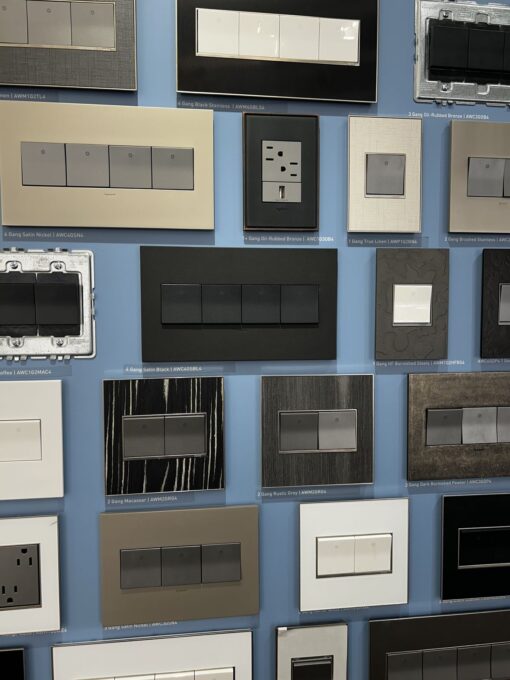
- Color coordination: white and black remain the most versatile options, while matte finishes tend to photograph and age better than glossy plastic.
- Minimalist interiors: flat panels, hidden screws, and matte surfaces read as more intentional in contemporary spaces.
- Traditional or rustic interiors: brass finishes or vintage-style toggles can actually complement an older home’s character rather than fighting against it.
Energy Efficiency and Smart Control
Beyond convenience, switches can meaningfully affect a household’s energy bill over time.
- Motion sensors in low-traffic areas like closets and garages prevent lights from being left on accidentally.
- Scheduled smart switches cut down on wasted electricity during hours a room typically sits empty.
- Dimming reduces power draw at lower brightness levels, particularly with dimmable LED bulbs. The U.S. Department of Energy’s guidance on residential lighting controls is a useful reference for anyone comparing the real-world savings of these options.
Common Mistakes to Avoid
| Mistake | Consequence | Better Approach |
|---|---|---|
| Choosing style over function | Switch looks nice but is inconvenient to use daily | Test the switch’s feel and placement before committing |
| Ignoring bulb compatibility | Flickering or humming with dimmers | Confirm dimmer-compatible bulbs before installation |
| Overcomplicating smart systems | Automation becomes frustrating rather than helpful | Start with one or two rooms before expanding |
| Mixing too many switch styles | Interiors feel visually inconsistent | Keep switch style consistent across connected spaces |
Planning for the Future
Electrical technology continues to shift, and a little forward planning during a renovation can save money down the line.
- Choose smart systems with some flexibility rather than a fully closed ecosystem that locks you into one brand.
- If rewiring during a renovation, ask an electrician about running a neutral wire to every switch box, even if smart switches aren’t part of the current plan — retrofitting later is far more disruptive.
- Some newer switch plates now include built-in USB charging ports or subtle night lighting, which can be worth considering for bedrooms and hallways.
Frequently Asked Questions
Are smart switches worth the extra cost compared to standard switches? For rooms used on a predictable schedule — like exterior lighting or a home office — the convenience and energy savings often justify the cost. For rarely used spaces like a guest closet, a standard switch is usually sufficient.
Can I install a dimmer switch myself? Basic dimmer installation is within reach for someone comfortable with simple electrical work, but bulb compatibility and proper wiring should be confirmed first. If the circuit involves multiple switches controlling the same light (a three-way setup), professional installation is strongly recommended.
Why does my dimmer switch make a buzzing sound? This usually happens when a non-dimmable bulb is paired with a dimmer switch, or when the dimmer isn’t rated for the specific bulb wattage or type installed. Swapping to a confirmed dimmable LED bulb often resolves it.
Do bathroom switches really need special ratings? Yes. Standard switches aren’t designed to handle the humidity levels common in bathrooms, and using one in a damp location increases the risk of corrosion and electrical failure over time.
How many smart switches does a typical home need to get real value from automation? Many households start with just three to five smart switches in high-traffic areas — living room, entryway, and bedroom — before deciding whether to expand further, rather than converting the entire home at once.
Final Thoughts
Choosing the right switch for each room isn’t about chasing the newest technology for its own sake. It’s about matching a small, frequently used device to the way a room actually gets lived in — where safety and function come first, and style follows naturally once those basics are covered. Readers working through other small but impactful home upgrades may also find our guide on living furniture ideas for small homes useful, since both topics share the same underlying idea: thoughtful, functional details often do more for a home than large-scale renovations.