
Low-Maintenance Garden Ideas for Busy Homeowners
A beautiful yard doesn’t have to eat up every weekend. More homeowners are trading high-upkeep lawns for gardens that look good with far less watering, trimming, and weeding.
This guide covers the changes that actually cut down on maintenance, not just the ones that sound good on paper.
Start With a Simpler Layout
Complicated garden designs create more work almost by default. Fewer beds mean fewer areas to weed and water. A simpler layout also tends to age better, since there’s less for any one section to go wrong.
Breaking a yard into a small number of clear zones, rather than scattering plantings everywhere, makes upkeep far more predictable.
Consider a Gravel Garden
Gravel gardens have grown popular in modern landscape design, pairing hardy plants with a low-maintenance surface. Fewer weeds, better drainage, and reduced watering needs make them a practical option for busy homeowners.
Beyond function, gravel also gives a yard a clean, contemporary look. It reads as intentional rather than neglected, even in the off-season when most plants aren’t blooming.
For anyone hesitant to commit to a full gravel yard, start smaller. A gravel bed near an entrance or along a fence line is a low-risk way to test the look before going bigger.
Raised Beds Simplify Everything
Raised garden beds give far more control over soil quality. Planting directly into existing ground often means fighting poor drainage or compacted dirt instead.
Weeding also gets easier in a raised bed. The contained space limits how far weed seeds can spread in from surrounding areas. The height reduces bending too, which matters for anyone who deals with back or knee pain during yard work.
Even a single raised bed near a kitchen door can handle herbs or vegetables. It doesn’t have to turn into a major weekend project.
Shrink the Lawn
Traditional grass is one of the most time-consuming parts of any yard. Mowing, watering, and fertilizing add up fast, especially over a large area.
According to Lawn Love, replacing part of a lawn with a deck eliminates that section’s maintenance entirely. The average cost runs around $21 per square foot. Ground cover plants like creeping thyme or clover work as a lower-cost alternative, spreading to cover soil without regular mowing.
Choose Native and Drought-Tolerant Plants
Native species are adapted to local rainfall and soil. They typically need less water and fewer interventions than plants imported from elsewhere. On the East Coast, Lawn Love points to varieties like coneflower and black-eyed Susan as reliable low-effort choices, while gardeners further west often turn to poppies and ceanothus for the same reason.
Drought-tolerant options like lavender, ornamental grasses, and sedum round things out nicely for yards that don’t get much rain.
Let Mulch Do the Heavy Lifting
Mulch might be the single best return on effort in a low-maintenance yard. It holds moisture in the soil, blocks weeds from getting established, and slowly improves soil quality as it breaks down.
A two to three inch layer around beds and tree bases makes a real difference. It cuts down noticeably on both watering frequency and weeding time.
Install Drip Irrigation
Manual watering is one of the biggest time sinks in a traditional garden. Drip irrigation delivers water straight to plant roots instead of spraying it everywhere. That wastes far less and keeps plants healthier.
Smart controllers take it a step further. They adjust watering schedules automatically based on weather, so nobody has to remember to turn a hose on or off.
Add Trees for Long-Term, Low-Effort Structure
Well-chosen trees are some of the lowest-maintenance additions a yard can get. Once established, many require little beyond occasional pruning, and they add height and shade that smaller plants can’t match.
Japanese maples are a popular pick for adding color without demanding much upkeep once they’re settled in.
Use Perennials Instead of Annuals
Annuals need replanting every single year, which adds cost and labor on a predictable schedule. Perennials return season after season without help, and many actually look better as they mature over a few years.
This connects to a broader idea covered in our home maintenance checklist for homeowners. Planning ahead consistently saves more effort than reacting to problems as they show up.
Lean on Hardscaping
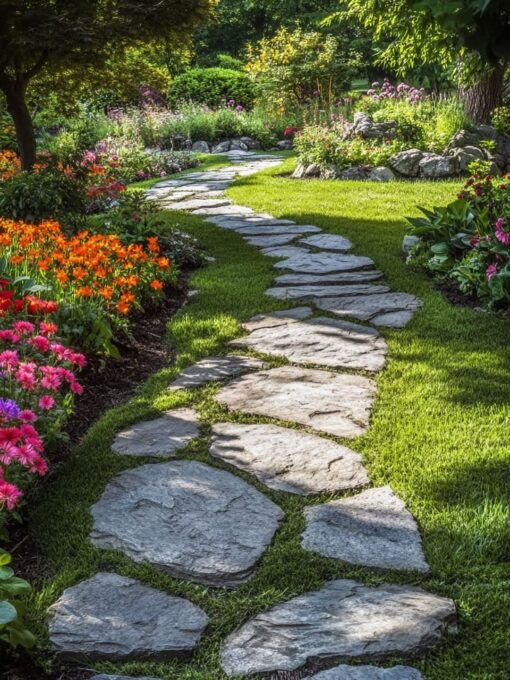
Stone pathways, paver patios, and gravel areas don’t need watering, mowing, or weeding at all. Increasing the ratio of hardscape to planted area is one of the most direct ways to cut ongoing yard work.
A rock garden, in particular, looks striking while requiring far less attention than a lawn covering the same footprint.
Water-Wise Habits Beyond the Irrigation System
Even with drip irrigation installed, timing still matters. Watering early in the morning, before the sun is at full strength, reduces evaporation and gets more water actually absorbed into the soil.
Grouping thirsty plants together, instead of scattering them among drought-tolerant ones, also prevents overwatering the plants that don’t need it. This pairs well with the plant grouping strategy covered earlier, since watering needs and sunlight needs often overlap.
Rain barrels are another simple addition. Collected rainwater cuts down on tap water use during dry stretches, and most systems require little more than occasional cleaning to keep running.
Group Plants by Water and Sun Needs
Placing plants with similar watering and light requirements next to each other makes care far more efficient. Instead of babysitting one thirsty plant surrounded by drought-tolerant neighbors, the whole bed can follow one simple watering routine.
This also tends to improve plant health, since nothing ends up over or under-watered because of its neighbors’ needs.
Common Mistakes That Undo Low-Maintenance Plans
Choosing plants that don’t suit local soil or climate is the most frequent misstep. It forces extra care no matter how the rest of the yard is designed. Overplanting is a close second, creating competition between plants and more upkeep overall.
Ignoring drainage causes problems too. Standing water damages roots and creates exactly the kind of ongoing issue a low-maintenance design is supposed to avoid.
Plan Around the Seasons, Not Just the Plants
A garden that only looks good in spring ends up needing constant swaps and replanting throughout the year. Mixing evergreen shrubs with plants that offer structure in winter avoids that cycle entirely.
Ornamental grasses hold their shape well into colder months, and ornamental bark or stone features add visual interest even when nothing is actively blooming.
Thinking about the full year upfront, rather than just the growing season, cuts down on the impulse replanting that quietly adds hours of work over time.
Frequently Asked Questions
What’s the fastest way to reduce garden maintenance?
Shrinking the lawn and adding mulch around existing beds usually deliver the biggest, fastest results for the least effort.
Do low-maintenance gardens still look attractive?
Yes. Many modern landscape designs prioritize both simplicity and visual appeal, using structure and texture instead of constant upkeep.
Are native plants really easier to care for?
In most cases, yes. They’re adapted to local rainfall and soil conditions, so they need less water and fewer interventions than non-native species.
Final Thoughts
A low-maintenance garden isn’t about giving up on a nice-looking yard. It’s about choosing plants, materials, and layouts that hold up with less constant attention. Start with the lawn, add mulch, and switch to native or drought-tolerant plants, and the weekly workload drops fast.
Pick one change from this list and try it this season. Shrinking the lawn or adding a thick layer of mulch usually delivers the most noticeable results for the least amount of work.