
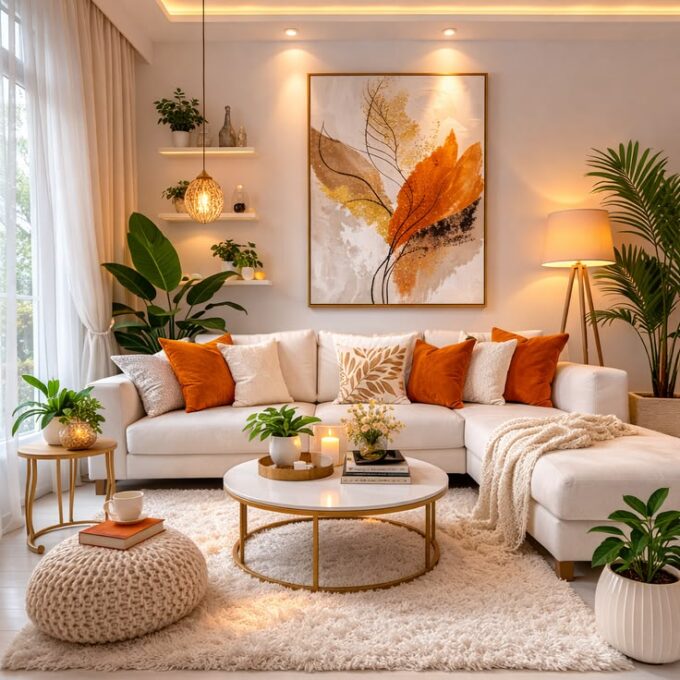
How to Make a Small Living Room Look Bigger Without Renovating
A small living room doesn’t have to feel cramped. Most of what makes a room read as spacious has nothing to do with square footage. It comes down to color, light, and a handful of visual tricks that designers rely on constantly.
This guide covers the changes that make the biggest visual difference, without knocking down a single wall.
Treat Every Surface as One Continuous Color
This one surprises a lot of people. According to Homes & Gardens, interior designer Liz Potarazu treats walls, ceiling, and trim as one continuous surface, all painted in a matching shade. She does this specifically to make rooms feel larger.
Her reasoning is simple. Without a visible break where the paint color changes, the eye doesn’t register where one surface ends and another begins. That missing stopping point makes the whole room read as more continuous.
Bold Color Isn’t Off the Table
Pale walls get recommended constantly, but that’s not the only path to a bigger-feeling room. There’s no strict rule limiting small spaces to soft neutrals. The color just needs a light hand applied elsewhere in the room.
The real risk isn’t boldness itself. It’s too many visual divides competing for attention. A rich, saturated color used consistently often reads as more spacious than several timid colors fighting each other.
Match Curtains to the Wall Color
Curtains in a contrasting color create another visual break, the same way a mismatched ceiling does. For example, choosing drapery close to the wall color keeps the perimeter of the room reading as one continuous surface.
Therefore, this small adjustment pairs naturally with the single-color wall approach. Together, they remove two of the most common visual interruptions in a small room.
Additionally, sheer or lightweight fabrics in a similar tone let daylight filter through, which reinforces both the color continuity and the room’s overall brightness at the same time.
Keep the Furniture Count Honest
Every extra side table or accent chair adds another shape for the eye to process. Even attractive pieces start working against a room once there are too many of them competing for attention.
Instead, a smaller number of slightly larger, well-chosen pieces usually reads as more intentional than a room filled with smaller items scattered everywhere.
As a result, editing furniture down to what actually gets used regularly often does more for a room’s sense of space than any single decorating trick on its own.
Use Mirrors With Intention
Mirrors remain one of the oldest tricks for expanding a room visually. Placement matters more than people assume. A mirror facing a window reflects daylight back into the room. That doubles the light source without adding a single fixture.
Positioning one behind a seating area, rather than tucked into a corner, tends to produce a stronger effect too. It reflects the room’s main activity zone instead of an empty wall.
Draw the Eye Upward
Floor space gets all the attention, but walls offer plenty of unused opportunity. Tall bookshelves, vertical panels, and artwork hung slightly higher than eye level all pull attention upward. That makes ceilings feel taller than they are.
Curtain rods mounted close to the ceiling reinforce this same effect. Placing them right above the window frame, by contrast, cuts that height illusion short.
Let Glass and Reflective Materials Do Some Work
Solid, heavy furniture blocks sightlines and adds visual weight to a small room. Glass coffee tables and acrylic side tables work differently. They let light travel through them instead of stopping at their surface.
This connects to a broader idea covered in our guide on interior design mistakes that make your home feel smaller. Furniture scale and placement matter just as much as the pieces themselves.
Choose One Focal Point, Not Several
A room without a clear focal point sends the eye wandering aimlessly. That reads as chaotic rather than spacious. A fireplace, one striking piece of art, or a single statement chair gives the eye somewhere to land first.
Once that anchor is set, everything else in the room can support it instead of competing with it.
Size Rugs Up, Not Down
Undersized rugs are one of the most common small-room mistakes. A rug that stops well short of the furniture around it makes a room look choppier and smaller than it actually is.
Sizing a rug large enough to extend beneath the front legs of major furniture pieces creates visual continuity. It stops the floor from breaking into disconnected islands.
Zone Without Walls
Small living rooms often need to double as a reading nook, a workspace, or an entertaining area. Physical dividers eat up space that a room can’t spare in that situation.
Rugs, lighting, and furniture arrangement can define zones just as effectively. A floor lamp and an armchair angled slightly apart from the main seating group reads as its own corner, without a single wall in sight.
Pick Furniture With Visible Legs
Chunky, low-slung furniture visually eats up floor space, since the eye can’t see underneath it. Sofas and chairs with exposed legs, by contrast, let the floor show through.
That visible strip of floor reads as extra square footage, even though nothing about the room’s actual dimensions changed. It’s a small detail, but it adds up alongside the other tricks in this guide.
Consequently, swapping just one or two heavy pieces for leggier alternatives can noticeably open up a room without touching anything else in the layout.
Layer Lighting Instead of Relying on One Fixture
A single overhead light flattens a room and leaves corners in shadow. Dark corners, in turn, read as smaller and less inviting than the rest of the space.
Adding a floor lamp or table lamp in those darker areas fixes this quickly. Even one extra light source, placed thoughtfully, does more for a room’s perceived size than most people expect.
Meanwhile, dimmers offer an easy way to adjust brightness without needing multiple lighting setups for different times of day.
Keep Window Views Unobstructed
A view outside, even a modest one, extends a room visually past its actual walls. Blocking that view with tall furniture or heavy plants cuts off a natural source of perceived depth.
Instead, positioning lower pieces near windows keeps sightlines open toward whatever lies beyond the glass, whether that’s a yard, a street, or simply more daylight.
Similarly, keeping windowsills clear of clutter reinforces the same effect, letting the eye travel straight through rather than stopping at a pile of objects.
Frequently Asked Questions
Does painting everything one color really work?
Yes, according to designers who use this technique regularly. Removing the visual break between wall, ceiling, and trim helps a room read as more continuous and open.
Are dark colors ever okay in a small living room?
Yes. Bold or dark colors can work well when applied consistently, without competing against several other strong colors in the same space.
What’s the biggest rug mistake in small rooms?
Choosing one that’s too small. A rug should generally reach under the front legs of the main furniture pieces to avoid breaking up the floor visually.
Final Thoughts
Making a small living room feel bigger rarely requires a renovation budget. Color continuity, smart mirror placement, and a clear focal point go a long way on their own. Pick one or two changes from this list and the room will likely feel different within a weekend.
Start with whichever change feels easiest to test. Repainting the trim to match the walls, or moving a lamp into a dark corner, costs little and shows results almost immediately.