
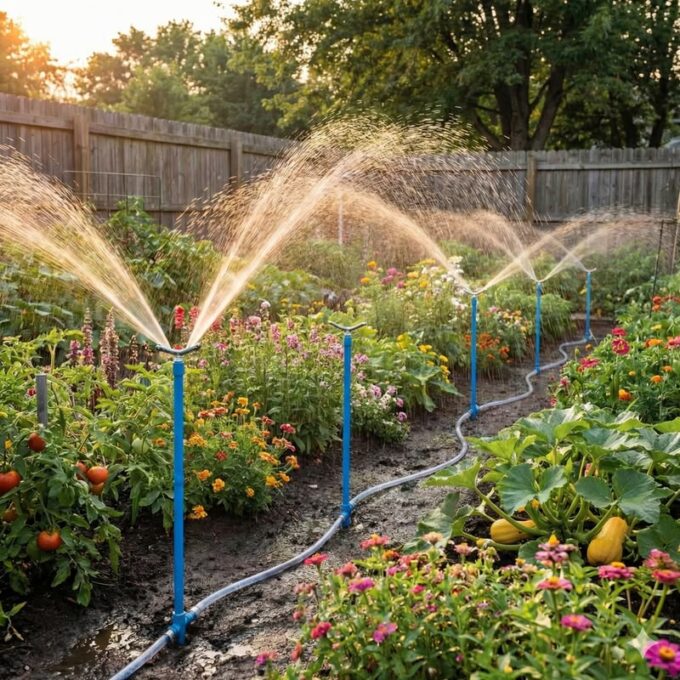
Best Time to Water Your Garden (Step-by-Step Guide)
Watering feels like the simplest task in gardening — point a hose at the soil, wait until it looks wet, move on. But the best time to water your garden actually has a measurable effect on how much of that water plants absorb versus how much just evaporates or runs off before doing any good. Two gardeners can use the exact same amount of water on the exact same plants and get noticeably different results, purely based on when they turned the hose on.
This guide covers why timing changes watering efficiency so much, what the ideal window actually looks like, and how soil type, climate, and season should adjust the general rule rather than override it.
Why the Clock Matters as Much as the Water
Watering isn’t just about delivering moisture — it’s about how much of that moisture actually reaches the roots before it’s lost to heat, wind, or evaporation. Timing affects several things at once:
- How much water evaporates before soaking into the soil
- How effectively roots can absorb what does soak in
- How long moisture sits on leaves, which directly affects disease risk
- How much overall stress the plant experiences from the combination of heat and sudden hydration
Get the timing wrong consistently, and a garden can end up both overwatered on paper and undernourished in practice, simply because so much of the water applied never reaches where it needs to go.
The Ideal Window: Early Morning
For the overwhelming majority of gardens, early morning — roughly 5 AM to 9 AM — is the best time to water. A few things line up in that window that don’t happen at any other point in the day.
Temperatures are still cool. Overnight cooling means the soil hasn’t heated up yet, so water has time to soak in before rising afternoon heat starts pulling moisture back out through evaporation.
Wind tends to be calmer. Early morning air is often stiller than midday, which reduces the amount of water lost to drift, particularly with sprinklers or hose spray.
There’s still time for leaves to dry. Even when some water inevitably lands on foliage, the rising sun and warming air dry it off within a few hours — which matters far more than it might sound, since it’s a major factor in whether fungal problems take hold.
Plants are heading into their most active hours. Watering ahead of the day’s heat means moisture is already available in the root zone when the plant needs it most, rather than playing catch-up in the afternoon.
Why Evening and Nighttime Watering Is Riskier
Evening watering feels convenient — it fits into an after-work routine, and the cooler temperatures seem appealing. The problem isn’t the temperature; it’s what happens to the water afterward.
Without sunlight or daytime heat to dry things out, water sitting on leaves and soil overnight can linger for many hours. That extended damp period is exactly the environment fungal and bacterial problems need to establish themselves — mildew, mold, and various leaf diseases are far more common in gardens watered late in the day than those watered in the morning.
There are exceptions. In extremely hot, arid climates, some evening watering may genuinely be necessary to keep up with moisture loss. Even then, it’s worth directing water at the soil rather than the foliage, and drip irrigation is a much safer choice than an overhead sprinkler after dark.
Why Midday Watering Wastes the Most Water
Watering during the hottest hours of the day is the least efficient option available, for a fairly simple reason: a large share of the water applied evaporates before it ever reaches the root zone. Strong sun and high temperatures pull moisture back out of the soil almost as fast as it goes in, which means more water gets used for the same amount of actual hydration.
There’s also a secondary concern, more debated among gardeners than settled science, that water droplets sitting on delicate leaves under intense midday sun can occasionally contribute to minor leaf scorch in sensitive plants. Regardless of how significant that specific effect is, the evaporation math alone makes midday watering the least effective option in almost every case.
Technique Matters As Much As Timing
Watering at the right hour helps, but it only goes so far without the right approach behind it.
Check the Soil Before Watering
Rather than watering on a fixed schedule, check first. Pushing a finger about two to three centimeters into the soil gives a reliable read: if it feels moist, hold off; if it’s dry at that depth, it’s time to water. This single habit prevents the majority of overwatering problems.
Water Deeply, Not Frequently
Frequent shallow watering trains roots to stay near the surface, which makes plants more vulnerable to heat and drought. Watering less often but more deeply encourages roots to grow downward in search of moisture, building a stronger, more resilient plant over time.
Aim at the Soil, Not the Leaves
Roots absorb water — leaves mostly just get wet and increase disease risk. Directing water at the base of the plant, rather than spraying foliage broadly, is one of the simplest ways to reduce fungal problems regardless of what time of day watering happens.
Water Slowly
Fast, heavy watering often runs off before the soil can absorb it, especially on compacted or clay-heavy ground. A slower, steadier application gives water time to soak in rather than pooling and draining away.
How Soil Type Changes the Equation
| Soil Type | Water Retention | Watering Adjustment |
|---|---|---|
| Sandy | Drains quickly | Water more frequently, use mulch to slow moisture loss |
| Clay | Retains water longer | Water less often, monitor closely for waterlogging |
| Loamy | Balanced drainage and retention | Generally needs the least adjustment |
Sandy soil loses water fast enough that even perfect morning timing won’t fully compensate without more frequent watering and a layer of mulch to help hold moisture in place. Clay, on the other hand, holds onto water long enough that overwatering becomes the bigger risk — root rot is far more common in clay-heavy gardens than in sandy ones.
Climate Shifts the Whole Schedule
- Hot, dry climates call for earlier watering, deeper sessions, and generous mulching to fight rapid evaporation.
- Humid climates generally need less frequent watering overall, but disease monitoring becomes more important since ambient moisture already keeps foliage damp longer.
- Cooler climates slow plant growth and reduce water needs — overwatering during cold spells is a common and avoidable cause of root damage.
Tools That Make Timing Easier to Get Right
| Tool | Best Use | Note |
|---|---|---|
| Watering can | Small gardens, container plants | Offers the most precise control |
| Garden hose with adjustable nozzle | Larger beds | Reduces waste compared to a fully open spray |
| Drip irrigation | Vegetable gardens, flower beds | Delivers water directly to roots with minimal evaporation |
| Sprinkler | Lawns | Less efficient for targeted plant watering, wets foliage broadly |
Drip irrigation in particular pairs well with morning watering, since a timer set for early hours removes the need to actually be present at 6 AM to get the timing right.
Mulch Extends the Value of Every Watering Session
A layer of mulch — bark, straw, wood chips, or compost — slows evaporation significantly, which means water applied in the morning stays available to roots longer into the day. Mulch also moderates soil temperature and suppresses competing weeds, making it one of the highest-value, lowest-effort additions to almost any garden’s watering routine.
Watering Sustainably
Efficient watering isn’t just about plant health — it also reduces unnecessary water use, which matters more every year in regions facing drought restrictions or rising water costs.
- Rain barrels capture free irrigation water and reduce reliance on a hose entirely for smaller gardens.
- Smart irrigation timers paired with drip systems apply water precisely when it’s needed, cutting down on both waste and guesswork.
- For broader guidance on efficient outdoor water use, the EPA’s WaterSense program offers practical, well-documented recommendations that go beyond gardening into overall household water efficiency.
Common Watering Mistakes
| Mistake | Signs | Fix |
|---|---|---|
| Overwatering | Yellow leaves, soft stems, moldy soil | Check soil moisture before watering, water less often but more deeply |
| Underwatering | Wilting, dry or crispy leaves | Increase watering depth, add mulch to retain moisture |
| Wetting leaves instead of soil | Fungal spots, mildew | Direct water at the base of the plant |
| Ignoring weather | Watering right before or during rain | Adjust the schedule based on actual conditions, not routine alone |
Adjusting Watering by Season
- Spring: plants enter active growth; moderate, consistent watering usually covers most needs.
- Summer: heat drives evaporation up sharply, often requiring more frequent and deeper watering.
- Fall: as temperatures drop, watering frequency can gradually decrease.
- Winter: many plants go dormant, and watering needs shrink significantly in most climates — this is also when overwatering becomes an easy, avoidable mistake.
Frequently Asked Questions
Is early morning really that much better than evening watering? Yes, primarily because of how long moisture lingers afterward. Morning watering gives the sun time to dry any water left on leaves, while evening watering leaves that moisture in place overnight, increasing the risk of fungal and bacterial issues.
What if I can only water in the evening because of my schedule? Evening watering isn’t disastrous — it’s simply less optimal. Focus water directly at the soil rather than the leaves, and consider drip irrigation over a sprinkler to minimize how much foliage gets wet.
How do I know if I’m overwatering versus underwatering? Overwatering tends to show up as yellowing leaves, soft or mushy stems, and a persistently soggy soil surface. Underwatering usually shows as wilting, dry or crisp leaf edges, and soil that pulls away from the edges of a container or bed.
Does mulch really make a significant difference? Yes. Mulch measurably slows evaporation, which means water applied in the morning stays available to roots for longer, reducing how often you need to water overall.
Should I water every day, or is that too often? Daily watering is rarely ideal for established plants — deep, less frequent watering generally produces stronger roots. Checking soil moisture before watering is a more reliable guide than a fixed daily schedule.
Does the best watering time change for indoor plants? The same general logic applies, though indoor plants aren’t affected by direct sun evaporation the same way outdoor ones are. Morning watering is still generally preferred, mainly because it gives excess moisture on leaves time to dry during the day rather than sitting overnight.
Final Thoughts
The best time to water your garden isn’t a minor scheduling detail — it’s one of the more overlooked factors separating a thriving garden from one that’s constantly playing catch-up on moisture and disease. Early morning consistently gives plants the best combination of cooler temperatures, reduced evaporation, and time for leaves to dry, and pairing that timing with deep, root-focused watering and a good layer of mulch does more for plant health than almost any other single habit. For readers working through other functional home and garden upgrades, our guide on how to hide an electrical panel covers a similar principle indoors — small, practical adjustments that improve daily life without a major overhaul.