
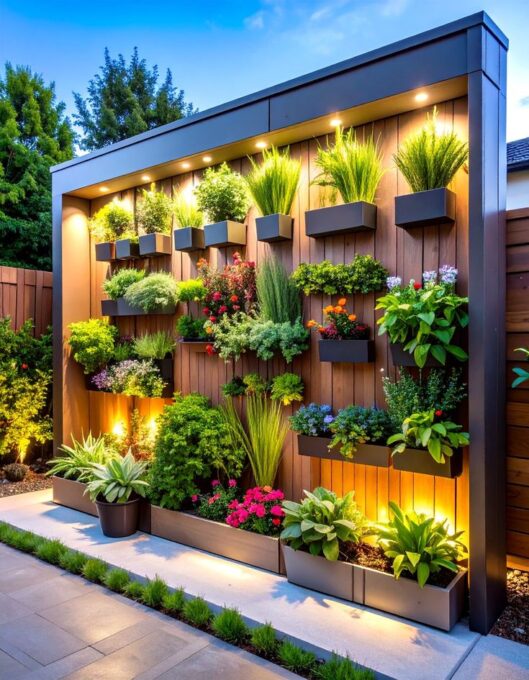
Top 3 Vertical Garden Ideas for Small Spaces
ot having a yard used to mean not having a garden. That’s changed. Vertical garden ideas for small spaces have turned balconies, kitchen walls, and even narrow apartment hallways into genuine growing areas, simply by shifting the direction plants grow — up instead of out. A single wall can now hold what would have needed several square meters of ground space a decade ago.
This guide covers the full range of options, from a weekend pallet project that costs almost nothing to full living wall systems used in offices and hotels, along with the plant selection, watering, and design choices that determine whether a vertical garden actually thrives or slowly fails.
Why Vertical Gardens Are More Than a Design Trend
It’s easy to file vertical gardens under “decoration,” but the benefits go beyond looks.
- Air quality improves as plants absorb pollutants and release oxygen, which matters more in dense urban apartments than most people realize.
- Surrounding temperatures drop slightly, since plant surfaces cool the air around them — a small but measurable effect in hot climates or sun-facing balconies.
- Ambient noise decreases, as foliage helps absorb sound in busier city environments.
- Stress and focus improve with consistent exposure to greenery, an effect well-documented enough that offices increasingly install living walls specifically for this reason.
- Space efficiency is unmatched — a vertical setup can fit in a kitchen corner, a narrow balcony, or even a bathroom wall where a traditional garden bed simply isn’t an option.
Budget-Friendly DIY Projects to Start With
Wooden Pallet Gardens
This is usually the easiest entry point for anyone new to vertical gardening. A cleaned, sanded pallet lined with fabric or plastic backing becomes a series of small planting pockets once filled with soil. It works particularly well for herbs — basil, mint, parsley, oregano — as well as small succulents, and it can lean against almost any wall, indoors or out.
Hanging Bottle Gardens
Recycled plastic bottles, cut open and filled with soil, make surprisingly effective small planters when hung from rope, wire, or a simple frame. This method costs almost nothing, reduces plastic waste, and is easy to expand gradually by adding more bottles as the garden grows. It suits small herbs and leafy greens especially well, and works nicely in a kitchen where space near a window is limited.
Wall-Mounted Modular Planters
For a cleaner, more finished look than a DIY pallet or bottle setup, structured wall-mounted planters offer a more permanent solution. Brackets or a mounting rail hold individual pots or modular sections evenly across a wall. Trailing plants like ivy or pothos work particularly well here, since their downward growth fills in the visual gaps between planters naturally.
Moving Up: Indoor Living Walls and Hydroponic Systems
Full Indoor Living Wall Systems
This is a significant step up from DIY methods — an entire interior wall built out with modular panels, either soil-based or hydroponic, connected to an integrated irrigation system that distributes water evenly across the whole installation. These systems show up increasingly in offices, apartments, and hotels because the visual impact is immediate and the air quality benefits are genuinely measurable in enclosed spaces.
Reliable plant choices for this setup include pothos, ferns, philodendron, peace lily, and English ivy — all species that tolerate the relatively controlled, moderate-light conditions typical of an interior wall installation.
Hydroponic Vertical Systems
Hydroponics removes soil from the equation entirely, growing plants in stacked trays or vertical tubes where nutrient-rich water circulates directly to the roots. This approach is popular in urban farming specifically because it grows plants faster than soil-based methods while using less water overall. Lettuce, spinach, basil, mint, and kale are common choices, since leafy greens and herbs adapt especially well to a hydroponic setup.
Making the Most of a Balcony
Balconies are frequently the most underused space in an apartment, and a vertical approach can turn even a narrow one into a genuinely usable green corner.
- Mount vertical planter panels along the main wall.
- Hang pots from the ceiling where overhead clearance allows.
- Add railing-mounted planters for herbs that need quick kitchen access.
- Reserve corners for taller plants, which helps balance the overall layout.
Lavender, rosemary, jasmine, petunias, and succulents all handle balcony conditions well, tolerating the more intense, direct sun exposure that many balconies get compared to interior rooms.
Modular Metal Frame Systems
For a more architectural, structured look, modular metal frames arrange plants in a customizable grid — an approach commonly seen in modern restaurants and commercial interiors. These frames are durable, easy to expand or reconfigure, and suit tropical plants, ferns, succulents, and smaller ornamental species particularly well. They’re a strong option for anyone who wants a vertical garden that reads as intentional architecture rather than a collection of individual planters.
Design Principles That Separate Good Walls From Great Ones
A vertical garden that simply fills every gap with a plant tends to look busy rather than intentional. A few design habits make a noticeable difference.
Layering creates depth. Placing trailing plants at the front, medium foliage in the middle, and structural greenery toward the back mimics how plants actually layer in nature, which reads as far more organic than a flat grid of identical pots.
Color has a psychological effect, not just a visual one. Dark greens tend to read as grounded and stable; lighter greens feel fresher and more energetic; occasional flowering accents create natural focal points that draw the eye across the wall rather than letting it flatten into background texture.
Repetition creates rhythm. Repeating a particular plant or shape at intervals across a wall creates a sense of intentional pattern rather than randomness, even in an otherwise asymmetrical design.
Texture variation adds richness. Mixing large, bold leaves with finer, more delicate foliage keeps a wall from feeling monotonous, especially at a distance where color alone might not carry the design.
Lighting: The Factor Most Setups Get Wrong
Most plants genuinely need consistent light to thrive, and vertical setups have a specific quirk worth planning for: plants near the top of a wall or frame often receive noticeably more light than those lower down, simply due to how light falls across a vertical surface. This uneven distribution is one of the more common reasons a vertical garden looks great for the first few months and then starts thinning out unevenly.
Positioning near windows or outdoor light sources solves this for sunlit spots, but interior walls without strong natural light generally need supplemental LED grow lights to keep lower sections healthy long-term.
Watering Without Overdoing It
Vertical gardens behave differently than traditional pots when it comes to watering, mainly because gravity constantly pulls moisture downward through the structure.
- Drip irrigation distributes water evenly across all plants and is the most reliable method for larger installations, since it reaches every section without relying on manual attention.
- Manual watering with a spray bottle or watering can works fine for smaller setups, and it offers more direct control over how much moisture each section actually gets.
- Overwatering is the more common failure mode, not underwatering — excess moisture trapped in a vertical structure leads to mold and root rot far more often than plants simply drying out.
Soil and Drainage Matter More Than in a Standard Garden Bed
Lightweight, well-draining potting soil is essential for vertical setups, since heavier soil adds unnecessary structural weight and tends to retain more moisture than a vertical system can safely handle. Organic compost blends work well because they supply nutrients while still maintaining a healthy moisture balance. Drainage deserves particular attention here — a vertical garden without a clear path for excess water to escape is one of the most common causes of mold, structural damage, and root rot.
Maintenance That Keeps It Looking Good Long-Term
- Weekly: check irrigation flow, trim overgrown sections, remove dead leaves.
- Monthly: refresh soil nutrients where needed, replace any struggling plants, inspect the structure for stability.
- Seasonally: reorganize the layout if growth patterns have shifted, swap in seasonal species, and give the whole structure a deeper clean.
Consistency matters more than intensity here — a vertical garden checked briefly every week rarely develops serious problems, while one left unattended for a month can decline surprisingly fast.
Choosing Plants by Light Level
| Light Level | Good Options |
|---|---|
| Low-light indoor | Snake plant, ZZ plant, pothos |
| Medium-light | Ferns, philodendron, peperomia |
| Bright/outdoor | Lavender, rosemary, succulents |
| Accent/decorative | Anthurium, bromeliads, small orchids |
Matching plant selection to actual available light, rather than what looks best in a photo, is one of the simplest ways to avoid a vertical garden that struggles from the start.
Common Mistakes Worth Avoiding
| Mistake | Consequence | Fix |
|---|---|---|
| Overcrowding | Competition for nutrients, poor airflow | Leave breathing room for growth |
| Poor drainage planning | Mold, root rot, structural damage | Build in a clear drainage path from the start |
| Mismatched plant placement | Sun-loving plants struggle in shade, and vice versa | Match species to actual light conditions |
| Weak structural support | Risk of collapse when fully watered and grown in | Reinforce mounting points for the wall’s full weight |
| Inconsistent maintenance | Gradual decline, pest issues | Keep a simple weekly and monthly routine |
Where Vertical Gardening Is Headed
Automation is changing what’s realistic for a home vertical garden. Moisture sensors, automated pumps, and app-based monitoring now let a system water itself precisely when needed, which meaningfully reduces the two most common failure points — over- and underwatering — for anyone without time for daily manual care. At a larger scale, exterior living walls on building facades are increasingly used specifically for their insulating and cooling effects in urban environments; the EPA’s Green Infrastructure program documents how vegetated walls and roofs contribute to reducing urban heat and managing stormwater, which is a useful reference for anyone curious about the environmental case behind the trend, not just the aesthetic one.
Frequently Asked Questions
What’s the easiest vertical garden project for a complete beginner? A wooden pallet garden or a hanging bottle setup are both low-cost, low-risk starting points that don’t require any specialized hardware or irrigation planning.
Do vertical gardens need more watering than regular potted plants? Not necessarily more, but watering needs to be more evenly distributed, since gravity pulls moisture downward through the structure. Drip irrigation solves this well for larger setups.
Can a vertical garden work in a room with no natural light? Yes, with LED grow lights positioned to cover the whole wall evenly. Without supplemental lighting, plants lower on a low-light wall will generally struggle over time.
How much weight does a fully grown, watered vertical garden typically add to a wall? This varies significantly by size and system, but soil, water, and mature plants add up quickly. Any substantial installation should have its mounting and structural support confirmed before the garden is fully planted.
What’s the biggest reason vertical gardens fail? Poor drainage planning and overwatering are the most common culprits, followed closely by uneven light distribution across taller structures.
Are hydroponic vertical gardens harder to maintain than soil-based ones? They require more upfront setup, but ongoing maintenance is often simpler once the system is running, since nutrient delivery is automated and there’s no soil to manage or replace.
Final Thoughts
A vertical garden succeeds or fails on the same basics regardless of scale — a pallet planter and a full living wall both depend on matching plants to light, managing drainage carefully, and keeping up with simple, consistent maintenance. Starting small, with a pallet or a handful of hanging bottles, is a genuinely good way to learn what works in a specific space before investing in a larger system. For readers thinking through other space-efficient upgrades, our guide on the best time to water your garden pairs naturally with this one, since good timing matters just as much for a vertical setup as it does for a traditional garden bed.