
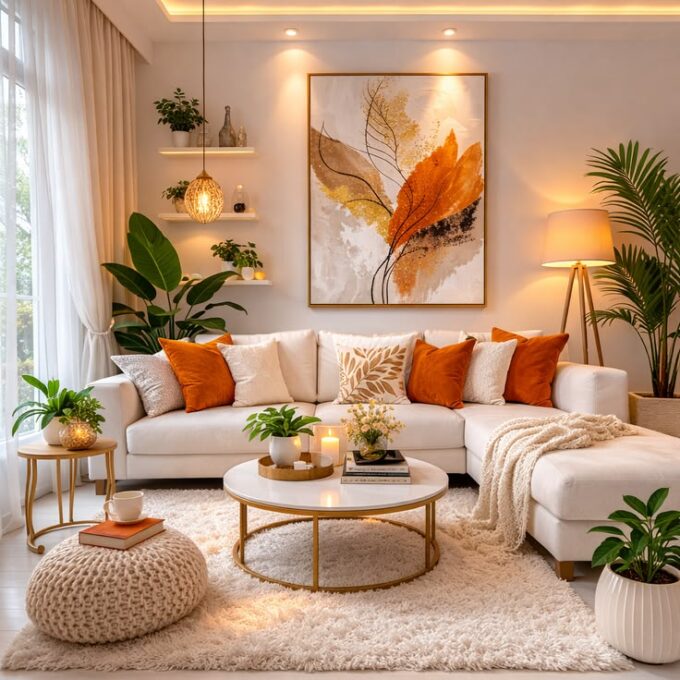
How to Decorate a Small Living Room on a Budget
Most advice about small living rooms starts with a list of things to buy — a slim sofa, a big mirror, a few floating shelves. The furniture matters, but it’s rarely the actual problem. Decorating a small living room on a budget usually comes down to planning before purchasing, since the most common (and expensive) mistake is buying pieces that don’t fit the space, the light, or the layout, and then trying to fix the room around them.
This guide walks through the planning steps worth doing before spending anything, followed by the specific color, lighting, and furniture choices that make the biggest visual difference for the least money.
Why Small Rooms Aren’t Actually a Design Disadvantage
There’s a common assumption that a bigger living room automatically looks better. In practice, small rooms come with a few genuine advantages that are easy to overlook.
- They cost less to furnish, since fewer pieces and less fabric are needed overall.
- They’re easier to keep organized, simply because there’s less room for clutter to accumulate.
- They tend to feel cozier and more intentional once the layout is dialed in.
- They force better decisions — every piece has to earn its spot, which usually improves the overall design.
The rooms that feel cramped aren’t usually small because of square footage; they’re small because of poor planning, mismatched scale, or too many competing colors and textures.
Measure and Observe Before Buying Anything
This step gets skipped constantly, and it’s the single most common reason small-space furniture purchases go wrong.
- Measure the room itself — wall lengths, window and door placements, ceiling height, and any awkward corners or radiators that will affect furniture placement.
- Track the natural light over a full day. A wall that looks bright at noon might be dim by early evening, which affects both paint color choice and where a reading chair should go.
- Define the room’s actual function. A living room used mainly for watching TV needs a different layout than one built around reading or entertaining guests.
A tape measure and ten minutes of observation prevents the most expensive mistake in small-space decorating: a sofa or table that’s a few inches too large for the space it needs to share.
Build the Layout Before Choosing Decor
Furniture arrangement does more for a small room’s sense of space than almost any single purchase.
- Keep pathways clear. Furniture blocking a doorway or the natural walking path through a room makes it feel smaller than it is, regardless of how much open floor space technically exists.
- Avoid pushing every piece against the wall. It seems logical, but a room with everything flush to the perimeter often feels oddly empty in the center. Floating a sofa a few inches off the wall, even slightly, can actually improve the sense of balance.
- Use corners intentionally. A corner shelf, a reading chair, or a tall plant makes use of space that often sits empty otherwise.
Choosing a Color Palette That Works With the Space, Not Against It
Color has an outsized effect on how large or small a room feels, and it’s one of the cheapest changes available.
| Approach | Best For | Effect |
|---|---|---|
| Light neutrals (white, beige, soft gray) | Rooms with limited natural light | Reflects light, feels airy and open |
| One accent color | Rooms that need visual interest | Adds personality without overwhelming |
| Consistent palette throughout | Any small space | Reduces visual chaos, feels calmer |
| Dark contrast in small doses | Bright, well-lit rooms | Adds depth without shrinking the space |
A palette that’s too neutral can feel flat, so a single accent color — repeated through pillows, a rug, or artwork — usually strikes the right balance between openness and personality. The mistake worth avoiding is introducing three or four unrelated colors at once, which tends to visually fragment a small room rather than unify it.
Furniture That Does More Than One Job
Multi-functional furniture is one of the most effective budget strategies precisely because it solves two problems — space and cost — with a single purchase.
- Sofa beds are worth considering for anyone hosting occasional guests without a spare room.
- Storage ottomans double as seating, a footrest, and hidden storage, which is genuinely useful for keeping blankets or remotes out of sight.
- Nesting or foldable tables expand when needed and take up almost no space when they’re not.
- Wall-mounted shelves or a floating TV console free up floor space that a traditional media unit would otherwise occupy.
Furniture Scale Matters More Than Furniture Price
An expensive sofa that’s too large for the room will always look worse than an inexpensive one that’s properly scaled.
- Look for raised legs rather than furniture that sits flush to the floor — visible legs create a lighter visual footprint even on a larger piece.
- Choose slimmer arms and frames over deep, overstuffed silhouettes, which tend to dominate small rooms.
- Consider glass or acrylic side tables, since transparent materials let light pass through visually, reducing how “full” the room feels.
Lighting: The Cheapest Tool With the Biggest Impact
A single overhead fixture is rarely enough, and poor lighting is one of the fastest ways to make a small room feel closed-in.
- Layer multiple light sources — a floor lamp, a table lamp, and a smaller accent light generally do more for a room’s atmosphere than one bright ceiling fixture alone.
- Let in as much natural light as possible. Heavy curtains or furniture blocking a window make a room feel smaller almost instantly; sheer or light fabric panels are a low-cost fix.
- Choose warm-toned bulbs over cool white ones for a cozier, more relaxed feel in the evening.
Mirrors: An Old Trick That Still Works
Mirrors remain one of the most reliable small-space tools, mainly because they’re inexpensive relative to the visual impact they create.
- Placing a mirror opposite a window reflects natural light back into the room.
- One larger mirror tends to work better than several small ones, which can start to feel busy rather than expansive.
- Positioning a mirror to reflect an attractive view — a piece of art, a plant, or a well-lit corner — adds depth rather than just brightness.
Using Walls and Rugs to Add Height and Continuity
Vertical space is often the most underused resource in a small living room.
- Floating shelves provide storage and display space without taking up any floor area.
- Tall, narrow shelving units draw the eye upward, which makes the ceiling feel higher than it actually is.
- One larger piece of wall art generally reads as more intentional than a cluster of small frames, which can feel cluttered in a compact room.
Rug sizing deserves its own mention, since undersized rugs are one of the most common small-room mistakes. A rug that’s too small visually shrinks the seating area around it. As a general guideline, the front legs of the main furniture pieces should sit on the rug, which visually ties the seating area together instead of leaving it floating in the middle of the floor.
Texture and Plants Instead of More Decor
Once the layout, color, and lighting are settled, texture does more for the room’s character than adding more objects.
- Throw blankets, woven baskets, and linen curtains add richness without visual clutter.
- Low-maintenance plants — pothos, snake plants, or a small ZZ plant — bring life into the room without demanding much space or care.
- Hanging or wall-mounted planters keep greenery off the floor entirely, which matters more in smaller rooms than larger ones.
Common Mistakes That Undo Good Planning
| Mistake | Why It Hurts the Room | Fix |
|---|---|---|
| Buying furniture before measuring | Pieces don’t fit the actual space | Measure walls, doorways, and walking paths first |
| Too many colors at once | Creates visual chaos | Stick to one neutral base plus one accent |
| Undersized rugs | Shrinks the perceived seating area | Size the rug so furniture legs sit on it |
| Blocking natural light | Makes the room feel darker and smaller | Use sheer curtains, avoid furniture in front of windows |
| Overcrowding surfaces | Reads as cluttered rather than styled | Keep decor intentional and limited |
A Practical, Gradual Approach to Budget Decorating
Trying to finish a room all at once often leads to rushed decisions and mismatched pieces. A more sustainable approach usually works better long-term.
- Start with the essentials: seating, a rug, and layered lighting.
- Add storage solutions once the basic layout feels functional.
- Introduce texture and personality gradually — textiles, art, and plants.
- Invest a bit more in timeless, neutral pieces that won’t feel dated in a year or two.
Frequently Asked Questions
What’s the single most impactful change for a small living room on a tight budget? Lighting. Layering a floor lamp and a table lamp alongside existing overhead light tends to transform a room’s atmosphere more noticeably than most furniture changes, and it’s usually the least expensive fix available.
Is it better to use one large rug or a few smaller ones? One larger rug almost always reads better in a small room. Multiple smaller rugs tend to fragment the floor space and make the layout feel busier than it is.
Should furniture always be pushed against the walls in a small room? Not necessarily. Floating a sofa or chair slightly off the wall can actually improve the room’s balance, especially if pushing everything to the perimeter leaves the center feeling empty.
What colors make a small living room feel bigger? Light neutrals — white, soft gray, beige, and warm off-whites — reflect more light and generally make a room feel more open. A touch of contrast through decor items keeps the space from feeling flat.
How many plants are too many for a small living room? There’s no fixed number, but if the plants start competing with the room’s main furniture or blocking natural light, it’s worth scaling back. A few well-placed plants usually do more than many scattered ones.
Is minimalism necessary for small-space design? Not strictly, but intentionality is. A small room can hold personality and texture as long as each item earns its place, rather than filling every available surface simply because there’s room for it.
Final Thoughts
Decorating a small living room on a budget isn’t really about spending less — it’s about spending more deliberately. Measuring first, planning the layout before shopping, and prioritizing lighting and color over quantity of decor consistently outperforms a bigger budget spent without a plan. For readers looking to extend this same thinking to architectural details, our guide on living room beam decorating ideas covers how a similar intentional approach applies to a room’s ceiling, not just its floor plan.