
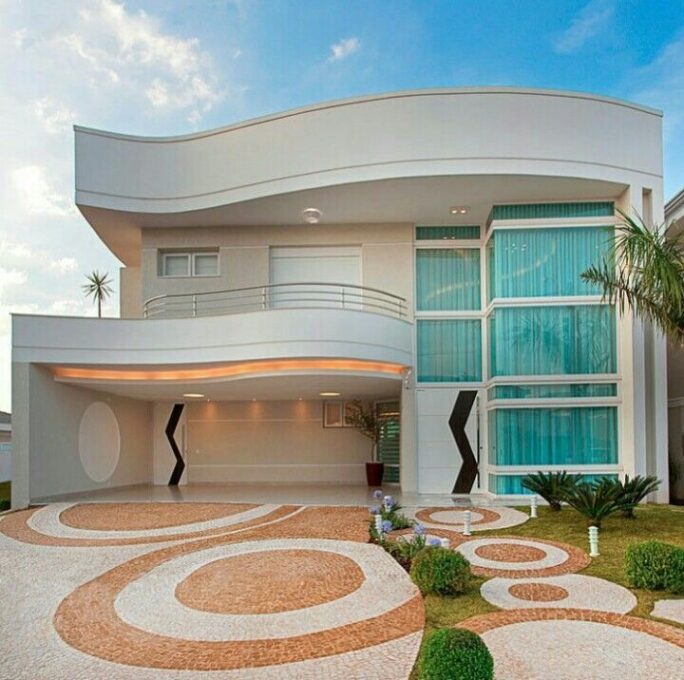
Wavy Balcony: Pros and Cons
Flip through any recent architecture feed and it’s hard to miss the shift away from strict right angles. Curved facades, sculptural staircases, and — increasingly — balconies that flow rather than jut out in flat rectangles. Wavy balcony pros and cons come up constantly in conversations between architects and homeowners for a simple reason: the look is undeniably striking, but curved construction plays by a different set of rules than a standard balcony, and those rules affect cost, timeline, and long-term maintenance in ways that aren’t always obvious from a rendering.
This guide breaks down what a wavy balcony actually involves structurally, where the real advantages lie, where the trade-offs bite, and how to decide whether the investment fits a specific project.
What Makes a Balcony “Wavy” in the First Place
A wavy or curved balcony replaces the traditional flat, rectangular edge with a flowing line — sometimes gentle, sometimes dramatically sculptural. Instead of each floor’s balcony lining up in a repeating grid, the curves create movement across the entire facade, which is why this style shows up so often in luxury towers and beachfront developments where the building’s silhouette is part of its identity.
The visual effect usually comes from a few shared characteristics:
- Continuous curved edges rather than straight rails
- Organic lines that echo natural forms — waves, dunes, or flowing water
- Integrated railing systems that follow the curve rather than interrupting it
- A sculptural quality that reads differently depending on the angle it’s viewed from
Why This Style Has Gained So Much Traction
A few forces are pushing curved balcony design from a rare architectural statement into something increasingly common in new luxury construction.
Architecture is moving away from strict minimalism. For years, flat lines and hard geometry dominated modern design. Many architects are now leaning toward softer, more organic forms that feel less mechanical and more human-scaled.
Distinctive buildings sell. In crowded real estate markets, a building that looks identical to ten others nearby has a harder time standing out. A curved balcony system becomes part of a property’s visual branding — something a flat balcony rarely achieves on its own.
Photography and social platforms reward dramatic architecture. Curved surfaces catch shadow and light in ways flat surfaces don’t, which makes them disproportionately visible on platforms like Instagram and Pinterest — a factor that increasingly shapes what developers choose to build.
The Real Advantages of a Wavy Balcony
Visual Impact That’s Hard to Replicate
This is the advantage most people already assume, and it holds up. A curved balcony creates movement across a facade that a repeating grid of flat rectangles simply can’t. Even a fairly modest building can read as significantly more sophisticated once its balconies introduce that kind of flow.
Perceived Property Value
Buyers and renters frequently associate curved, sculptural architecture with premium construction, even when the underlying unit sizes and finishes are comparable to a neighboring flat-balcony building. In competitive markets, that perception alone can translate into a measurable difference in interest and, in some cases, price.
A Softer, More Natural Feel
There’s a reasonably well-documented psychological pattern here: people tend to respond to curved forms as more welcoming and less severe than sharp, angular ones. Whether or not a resident consciously notices it, a curved balcony tends to feel less clinical than a flat rectangular one, especially paired with ocean or landscape views.
More Room for Creative Detail
Because a curved balcony is already a design statement, it tends to invite more thoughtful detailing — integrated lighting, sculptural railings, or landscaping that follows the curve — rather than the standard treatment a flat balcony usually gets.
The Trade-Offs Worth Taking Seriously
Construction Costs Climb Quickly
This is the trade-off that ends more wavy balcony projects than any other. Curved formwork, more complex reinforcement, and specialized labor add up. Depending on the complexity of the curve and the materials involved, project costs commonly run 30% to 50% higher than a comparable straight balcony — a range worth confirming directly with a structural engineer before committing to a design, since it varies significantly by region and material choice.
Engineering Gets More Complicated
A straight balcony distributes structural load in a fairly predictable, well-understood way. A curved one requires more detailed analysis of load distribution, wind resistance, and material flexibility, since the forces acting on a curved cantilever don’t behave the same way as they do on a flat one. This isn’t a reason to avoid the design — it’s a reason to make sure the engineering team has direct experience with curved structural systems specifically, not just general balcony work.
Timelines Stretch
Precision work takes longer. Curved formwork has to be built and checked more carefully than a standard rectangular mold, and finishing details — especially where curved glass or custom railings are involved — add real time to a construction schedule.
Furniture Becomes a Genuine Practical Problem
This one surprises a lot of homeowners after the fact. Nearly all standard outdoor furniture — tables, loungers, sectional seating — is designed for straight walls and square corners. A curved balcony often leaves awkward pockets of unusable space unless furniture is custom-built or chosen specifically for flexibility, which adds cost on top of the construction budget.
Maintenance and Drainage Need Extra Planning
Curved surfaces, particularly with glass railings, often require specialized cleaning approaches and more careful inspection over time. Drainage is the more serious concern structurally: water doesn’t always flow predictably off a curved surface the way it does off a flat one with a simple slope, so drainage has to be engineered deliberately from the start rather than treated as an afterthought. Skipping this step is one of the more common causes of long-term moisture problems in curved balcony construction.
Materials Commonly Used in Curved Balcony Construction
| Material | Role | Trade-Off |
|---|---|---|
| Reinforced concrete | Provides the sculptural shape and structural strength | Requires precise, often custom formwork |
| Steel framing | Supports cantilevered or complex curved sections | Adds cost but allows slimmer structural profiles |
| Curved glass railings | Enhances the fluid, open appearance | Significantly more expensive than flat glass panels |
Most wavy balcony systems combine at least two of these — typically concrete or steel for the structural shape, paired with glass for the railing — since no single material handles both the sculptural form and the safety requirements on its own.
Wavy Balcony vs. Traditional Balcony: A Quick Comparison
| Factor | Traditional Balcony | Wavy Balcony |
|---|---|---|
| Construction cost | Lower, more predictable | 30–50% higher on average |
| Timeline | Faster | Longer due to precision work |
| Furniture options | Widely available, off-the-shelf | Often requires custom or modular pieces |
| Maintenance | Simpler | More specialized, especially with glass |
| Visual impact | Functional, understated | Strong architectural statement |
Neither option is objectively “better” — the right choice depends entirely on whether the priority is budget predictability and simplicity, or architectural distinction and long-term visual impact.
Safety and Building Code Considerations
Curved architecture doesn’t get a pass on safety requirements just because it’s more complex to build. Structural stability, railing height, weight capacity, and waterproofing standards all still apply, and in most jurisdictions curved balconies face additional scrutiny during permitting precisely because the engineering is less standardized than a typical flat design.
Professional structural and waterproofing calculations aren’t optional here — poor execution on a curved balcony tends to surface as leaks or structural concerns years down the line rather than immediately, which makes cutting corners during construction especially risky. For general reference on structural design standards and best practices in residential construction, the American Institute of Architects publishes guidance that many architects consult when planning non-standard structural elements like curved balconies.
Design Tips If You Decide to Move Forward
- Keep furniture minimal. A curved balcony is already a strong visual statement; overcrowding it with furniture undercuts the effect.
- Echo the curve in smaller details. Rounded furniture, circular rugs, or curved planters reinforce the balcony’s shape instead of fighting against it.
- Invest in lighting. LED strips or soft indirect lighting along the curve make the balcony genuinely dramatic after dark, often more so than during the day.
- Resist over-decorating. The architecture itself is the focal point — restraint tends to serve curved designs better than a heavily styled space.
Is a Wavy Balcony Worth It?
This really comes down to priorities. A wavy balcony tends to make sense for projects where architectural distinction, luxury positioning, or long-term property value matter more than upfront cost and simplicity. It tends to make less sense for anyone prioritizing a fast, predictable build with easy furniture shopping and lower maintenance overhead.
Frequently Asked Questions
How much more expensive is a wavy balcony compared to a standard one? Costs commonly run 30% to 50% higher, though the exact figure depends heavily on the complexity of the curve, the materials chosen, and local labor costs. Getting a detailed quote from a structural engineer early in the planning process is the only reliable way to know for a specific project.
Can standard outdoor furniture be used on a curved balcony? Not comfortably in most cases. Standard rectangular furniture tends to leave awkward gaps against a curved edge, so many homeowners end up choosing modular or custom pieces to use the space efficiently.
Are wavy balconies more prone to leaks or water damage? Not inherently, but drainage requires more careful engineering than on a flat balcony, since water doesn’t flow off a curved surface as predictably. Poor planning at the construction stage is the more common cause of issues than the curved shape itself.
Do wavy balconies actually increase property value? They often increase perceived value and buyer interest, particularly in luxury or competitive markets, though the actual resale impact varies by location and the overall quality of the build.
Is a wavy balcony a good fit for a smaller residential renovation, or mainly for large developments? While most common in larger luxury developments, smaller curved balcony projects are possible on individual homes. The cost premium tends to be proportionally similar, so it’s worth budgeting carefully regardless of project size.
Final Thoughts
A wavy balcony can genuinely transform how a building reads from the street or the shoreline, and for projects where that visual identity matters, the investment often pays off in ways a flat balcony simply can’t match. The trade-offs — cost, timeline, furniture limitations, and more demanding maintenance — are real, though, and worth weighing honestly rather than getting swept up in the aesthetics alone. For readers thinking through other architectural details that affect a home’s everyday comfort, our guide on decorating a small living room on a budget covers a similar principle applied indoors: thoughtful planning matters more than the size of the budget.