
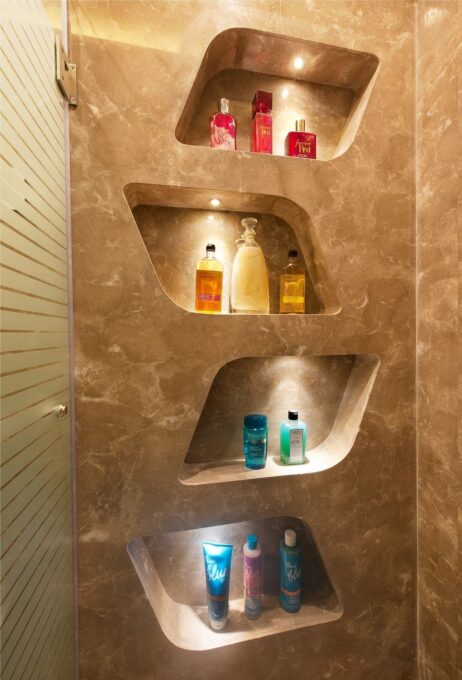
Granite vs Porcelain Niches 2026: How to Choose the Best for Your Home
Picking a surface material used to come down to one question: which one looks better in the showroom? That’s no longer how homeowners are deciding in 2026. Granite vs porcelain has become less about appearance and more about how a surface holds up to daily cooking, humidity, cleaning routines, and years of actual use.
Talking to contractors who install both materials regularly, a pattern comes up constantly: the homeowners who end up happiest aren’t the ones who picked the “prettier” slab — they’re the ones who matched the material to how the room actually gets used. This guide walks through that decision in detail, from durability to installation to where each material genuinely outperforms the other.
Granite and Porcelain: What You’re Actually Choosing Between
Before comparing performance, it helps to understand what each material is made of — because that’s what drives every difference that follows.
Granite: A Natural Stone With a Story
Granite is quarried, not manufactured. It forms over millions of years under heat and pressure, which is why no two granite slabs are identical. That uniqueness is part of its appeal, but it also comes with a maintenance reality many buyers don’t expect: granite is porous and needs periodic sealing to resist stains from oil, wine, or cosmetics.
Porcelain: Engineered for Consistency
Porcelain is made from refined clay fired at very high temperatures, which produces a dense, low-porosity surface. Because it’s manufactured rather than quarried, porcelain offers far more consistency — in color, pattern, and performance — and generally needs no sealing at all.
How They Actually Perform Day to Day
This is where most comparisons stop at specs. Here’s what actually shows up in daily use.
| Category | Granite | Porcelain |
|---|---|---|
| Heat resistance | Excellent — safe for hot pans | Good, but slightly lower than granite |
| Stain resistance | Requires sealing to prevent stains | Naturally stain-resistant |
| Water resistance | Moderate; needs sealing | Excellent — nearly non-porous |
| Visual consistency | Unique, varies slab to slab | Uniform and predictable |
| Maintenance | Periodic resealing required | Minimal, day-to-day cleaning only |
| Weight | Heavy, needs reinforced support | Lighter, easier to handle |
The takeaway most people miss: granite rewards attention, porcelain rewards neglect. If you’re realistic about how often you’ll actually reseal a countertop, that alone can settle the decision.
Three Mistakes That Lead to Regret
- Installing granite in a high-moisture area without sealing it properly. The result is staining and discoloration within the first year.
- Choosing porcelain expecting the visual depth of real stone. High-end porcelain can mimic marble convincingly, but it won’t fully replicate the natural variation of quarried stone.
- Underestimating installation requirements. Both materials — granite especially — depend on proper support and precise cutting. A rushed installation can undermine even premium material.
Durability: A Closer Look
Granite handles heat exceptionally well and can last decades with proper care, but it can chip at the edges under a hard impact and needs resealing to stay stain-resistant.
Porcelain resists mold, stains, and daily wear with almost no upkeep, and its non-porous surface makes it a strong performer in wet environments. Its main weakness is impact resistance — a heavy, hard object dropped at the wrong angle can crack a porcelain surface more easily than it would granite.
According to the Natural Stone Institute, proper sealing and routine care are the primary factors that determine how well natural stone surfaces perform over their lifespan — which reinforces why maintenance habits matter as much as the material itself.
Where Each Material Performs Best
Kitchens
Granite handles direct heat from pots and pans without damage and tends to be the material people choose for a visual centerpiece, like a kitchen island. Porcelain, meanwhile, is increasingly used for backsplashes and prep areas where easy cleanup matters more than heat exposure.
Bathrooms
Bathrooms are consistently wet environments, and that changes the calculus. Porcelain’s near-total water resistance makes it a safer long-term choice for showers, niches, and walls, while granite requires more diligent sealing to avoid moisture-related staining.
If you’re already planning a bathroom refresh, pairing the right surface material with an efficient layout — like the options in our guide to modern shower systems — tends to produce a more cohesive result than choosing materials and fixtures separately.
Outdoor Spaces
Both materials can handle outdoor exposure, but porcelain generally requires less ongoing maintenance against UV and weather fluctuations, while granite’s natural texture often blends more organically into garden or patio settings.
What They Actually Cost
| Cost Factor | Granite | Porcelain |
|---|---|---|
| Upfront material cost | Higher | More affordable |
| Installation | More complex, heavier handling | Generally simpler |
| Sealing | Recurring cost | Not required |
| Long-term maintenance | Moderate ongoing cost | Minimal |
Granite tends to be the higher upfront investment with an added recurring maintenance cost, while porcelain is usually more budget-friendly both at installation and over time. Neither is objectively “better value” — it depends on whether you’re optimizing for lower lifetime cost or for the specific look and feel granite provides.
A Decision Framework That Actually Works
Rather than starting with which material looks best, professionals typically start with these questions:
- How much maintenance are you realistically willing to do? Low tolerance points toward porcelain; if you don’t mind resealing periodically, granite stays on the table.
- Is uniqueness or consistency more important to you? Granite offers natural variation; porcelain offers a predictable, repeatable look.
- Will the surface be exposed to regular moisture? If yes, porcelain is generally the safer choice.
- Is this a visual focal point or a functional surface? Granite tends to shine as a statement piece; porcelain performs well as a practical, everyday surface.
The Hybrid Approach: Why Not Both?
Many 2026 projects skip the either/or decision entirely. A common combination uses granite for countertops or a feature area, paired with porcelain for walls, niches, and wet zones. This gives a space the visual richness of natural stone where it’s most visible, while keeping high-moisture areas low-maintenance.
Frequently Asked Questions
Does granite really need to be sealed every year? Not necessarily every year — it depends on the sealant used and how the surface is used, but periodic resealing (often every 1–3 years) is standard maintenance for granite.
Can porcelain crack easily? It’s more impact-resistant to scratches and stains than granite, but a hard, direct impact can crack porcelain more easily than it would damage granite.
Is porcelain a good substitute for marble? High-quality porcelain can closely mimic the look of marble or stone, though it won’t fully replicate the natural depth and variation of the real material.
Which material adds more resale value? Granite is often associated with premium, high-end finishes, while porcelain appeals to buyers who value low-maintenance, modern design — both can positively influence perceived value depending on the buyer.
Is one material objectively better than the other? No — the right choice depends on how the space is used, how much maintenance you’re willing to do, and whether you’re prioritizing natural uniqueness or consistent practicality.
Final Verdict
There’s no universal winner in the granite vs porcelain decision — only the right fit for a specific room and lifestyle. Choose granite if you want a natural, one-of-a-kind surface and don’t mind occasional sealing. Choose porcelain if low maintenance, water resistance, and consistent design matter more to you than natural variation.
For many homeowners, the smartest move in 2026 isn’t picking a side — it’s using both materials strategically, in the areas where each one genuinely performs best.