
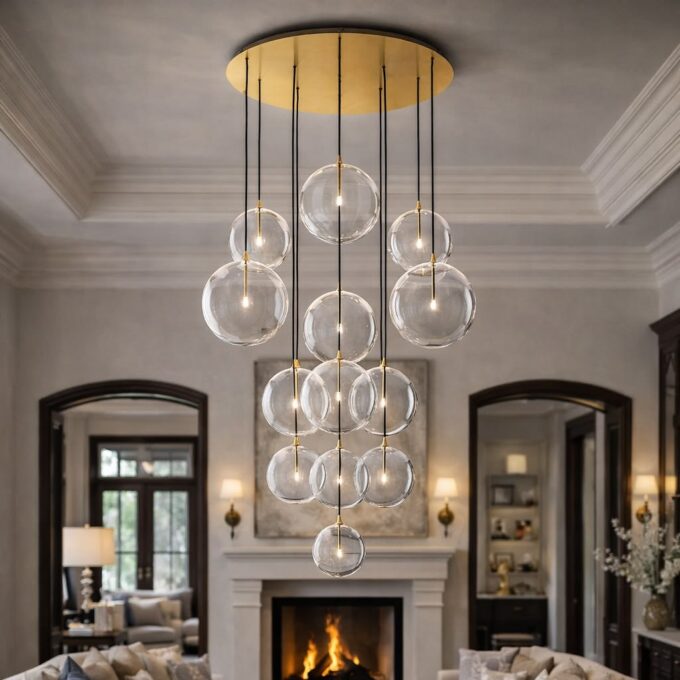
Modern Chandeliers 2026: How to Choose the Right Statement Light for Your Home
Lighting used to be an afterthought in most home design conversations — something picked at the very end, after the furniture and paint were already settled. That’s shifted. Modern chandeliers in 2026 are increasingly treated as a starting point rather than a final touch, largely because the right fixture does more than light a room; it sets the mood, defines the focal point, and, in more advanced designs, adjusts itself throughout the day.
This guide covers the styles actually worth considering right now, the sizing and placement rules that most buyers get wrong, and the practical cost and installation factors that don’t usually make it into the glossy photos.
Why Chandeliers Have Become a Design Decision, Not Just a Lighting One
A few years ago, a chandelier was largely decorative — something to look at, not something that shaped how a room functioned. That’s changed on a few fronts:
- Smart integration means many fixtures now adjust brightness, color temperature, and scheduling automatically, rather than sitting on a single fixed setting.
- Perceived space quality shifts noticeably with lighting quality — a well-lit room genuinely reads as larger and more inviting than an identical room lit poorly, and buyers and renters pick up on that difference even without consciously analyzing why.
- Energy efficiency expectations have risen, pushing LED-based designs to the front of most new chandelier lines rather than being treated as a compromise.
The practical result is that choosing a chandelier now involves more decisions than just “does this look good” — scale, placement, and how it fits into the room’s overall lighting plan all matter just as much.
Styles Worth Knowing in 2026
Geometric LED Sculptures
Clean, angular lines paired with energy-efficient LED elements give these fixtures a distinctly contemporary look. They tend to suit open living rooms and larger contemporary spaces best, where there’s enough visual room for a sculptural piece to stand out without overwhelming everything around it.
Minimalist Glass Rings
A simple circular form with soft, ambient light works well in smaller or more understated spaces — bedrooms, dining nooks, compact apartments — where a bold statement piece would feel out of proportion.
Brass Linear Fixtures
Popular over kitchen islands and dining tables, these combine clean horizontal lines with warmer metallic tones, striking a middle ground between modern and traditional that suits a wide range of kitchen styles.
Organic Wood and Metal Combinations
Mixing natural materials with metal framing brings warmth into an otherwise sleek, modern space — a good fit for Scandinavian-influenced or generally cozier interiors that still want a contemporary edge.
Clustered Orb Designs
Multiple glass spheres at varying heights create a dramatic, layered effect, particularly effective in entryways or rooms with higher-than-average ceilings where there’s vertical space for the layered look to actually register.
Reimagined Crystal
Crystal hasn’t disappeared — it’s just become lighter and more restrained, trading heavy ornate structures for a more minimalist frame with subtler shine, which suits elegant modern interiors without tipping into a more traditional, formal look.
Asymmetrical Statement Pieces
Bold, artistic, and intentionally unconventional, these work best in creative or loft-style spaces where the fixture is meant to function almost like a piece of art rather than blend into the room.
Smart App-Controlled Chandeliers
Voice control, scheduling, and app-based adjustment are increasingly standard features on higher-end fixtures, which matters most for smart-home-focused households already invested in that kind of integration elsewhere.
Outdoor-Rated Chandeliers
Weather-resistant materials have made statement lighting viable for covered patios, balconies, and entryways — a category that barely existed in mainstream design a decade ago.
The Sizing Rule Most People Skip
This is the single most common mistake in chandelier selection: choosing based purely on appearance without accounting for the room’s actual dimensions. A fixture that’s too large overwhelms a space; one that’s too small essentially disappears into the ceiling.
A commonly used sizing formula among designers is straightforward: add the room’s length and width in feet, then convert that number to inches to get a reasonable target diameter.
Example: A 12 ft × 10 ft room → 12 + 10 = 22 → roughly a 22-inch chandelier.
Dining Table Placement
For fixtures hung over a dining table specifically, two additional guidelines help avoid a common visual mismatch:
- Hang the chandelier 30–36 inches above the table surface.
- Choose a fixture width around two-thirds of the table’s length, which keeps the light source balanced rather than either dwarfing the table or looking undersized against it.
Ceiling Height Matters Too
Standard ceiling heights generally call for more compact designs, while higher ceilings can accommodate multi-tier or vertically oriented fixtures that would otherwise feel cramped in a standard room.
Installation: What Actually Goes Wrong
A beautiful chandelier installed poorly still looks wrong, and a few mistakes come up repeatedly in real installations.
| Mistake | Consequence |
|---|---|
| Weak ceiling support | Structural risk, especially with heavier fixtures |
| Incorrect hanging height | Disrupts the room’s visual balance |
| Poor wiring | Safety hazard, flickering, premature failure |
| Ignoring light distribution | Dark spots in some areas, glare in others |
Heavier fixtures, smart lighting systems, high ceilings, and anything involving complex wiring are generally worth handing to a licensed electrician rather than attempting as a weekend DIY project — the cost of professional installation is usually small relative to the fixture itself, and far smaller than the cost of fixing a structural or wiring issue afterward.
What You’re Actually Paying For
| Tier | Price Range | What to Expect |
|---|---|---|
| Budget | $100–$500 | Basic designs, standard bulbs, simpler materials |
| Mid-range | $500–$2,000 | Better build quality, more style variety, occasional smart features |
| Luxury | $2,000+ | Premium materials, advanced smart integration, statement scale |
It’s worth budgeting beyond the sticker price. Installation, any necessary electrical upgrades, ongoing maintenance, and smart system setup can add a meaningful amount to the total cost — expenses that are easy to underestimate when comparing fixtures purely by their listed price.
Layered Lighting: The Detail Most Guides Skip
A chandelier on its own, no matter how well chosen, rarely carries an entire room’s lighting needs. Designers generally rely on a three-layer approach instead:
- Ambient lighting — the main chandelier or overhead fixture, setting the room’s overall brightness.
- Task lighting — lamps, under-cabinet lights, anything focused on a specific activity like reading or food prep.
- Accent lighting — LED strips, wall sconces, smaller fixtures that highlight specific features or add depth to shadows the main fixture leaves behind.
This layering is genuinely one of the more reliable ways to distinguish a well-designed room from one that just has “a nice light fixture.” Eliminating shadows and giving different areas of a room their own appropriate lighting does more for a finished, high-end feel than upgrading the chandelier alone.
Matching the Fixture to How the Room Is Actually Used
- Dining rooms generally benefit from more focused, direct lighting over the table itself.
- Living rooms do well with a combination of ambient and decorative lighting, since the room typically serves several different functions throughout the day.
- Bedrooms call for softer, more relaxing light — a dramatic, bright statement piece can work against the room’s purpose here.
Matching furniture scale to fixture choice matters just as much: a large dining table generally pairs better with a linear fixture, an open living space suits geometric or sculptural designs, and a smaller room does best with something minimalist rather than a piece that competes for visual attention.
Common Design Mistakes Worth Avoiding
- Choosing based on trend alone. What looks current today can feel dated within a few years; a fixture with more timeless proportions tends to age better.
- Ignoring color and material harmony. A chandelier that clashes with existing metal finishes or wood tones in the room stands out for the wrong reasons.
- Overloading the space. Too many decorative elements competing for attention — an ornate chandelier alongside heavily patterned furniture and busy wall art — tends to feel cluttered rather than curated.
- Relying on a single light source. Without layered lighting, even a beautiful chandelier leaves a room feeling flat and unevenly lit.
Where the Category Is Headed
A few trends are worth watching for anyone planning a longer-term lighting investment. AI-adjusted lighting — fixtures that shift color temperature and brightness automatically based on time of day — is moving from a niche feature to something increasingly standard in higher-end lines. Sustainable materials, including recycled metals and glass along with genuinely long-lasting LED components, are becoming a real factor in purchasing decisions rather than just a marketing point. Modular designs that allow parts to be swapped or reconfigured over time offer a way to update a fixture’s look without replacing the whole thing, which is a meaningful shift for anyone hesitant to commit to one design permanently.
For broader context on how lighting design shapes the overall feel of a space, Architectural Digest’s guide to mood lighting is a well-regarded resource that many designers reference when thinking through a room’s lighting plan beyond the chandelier alone.
A Practical Checklist Before Buying
- Function: Does it provide the type of light the room actually needs?
- Scale: Does it match the room’s dimensions and ceiling height using the sizing guidelines above?
- Style: Does it genuinely connect with the rest of the home’s materials and finishes?
- Technology: Are smart features something you’ll actually use, or an unnecessary added cost?
- Maintenance: How easy is it to clean, particularly for fixtures with multiple glass or crystal elements?
- Longevity: Will the design still feel current in five to ten years, or is it tied closely to a passing trend?
Frequently Asked Questions
How do I know what size chandelier my room needs? Add the room’s length and width in feet, then use that number as the target diameter in inches. For dining rooms specifically, also aim for a fixture width around two-thirds of the table’s length.
Do I need a professional to install a chandelier? For lightweight, straightforward fixtures replacing an existing light, many homeowners handle installation themselves. Heavier fixtures, high ceilings, or anything involving new wiring or smart system integration are safer left to a licensed electrician.
Are smart chandeliers worth the extra cost? For households already using smart home systems, the added convenience of scheduling and app control is often genuinely useful. For others, a well-chosen standard fixture with good layered lighting around it may deliver similar day-to-day comfort at a lower cost.
What’s the biggest mistake people make when choosing a chandelier? Choosing based on appearance alone without checking size, placement height, and how it fits with the room’s existing furniture and finishes. A beautiful fixture that’s the wrong size for the room rarely looks right no matter how nice the design is.
Can a chandelier alone properly light a room? Rarely. Most well-lit rooms combine ambient lighting from the main fixture with task and accent lighting elsewhere, which fills in shadows and gives different areas of the room appropriate light for how they’re actually used.
Does upgrading lighting really affect a home’s resale value? Updated, well-chosen lighting does tend to improve first impressions and perceived quality during showings, which can support faster sales and fewer price negotiations, though the effect varies by market and how significant the upgrade is relative to the rest of the home.
Final Thoughts
Choosing a modern chandelier in 2026 comes down to balancing scale, function, and style rather than picking whatever looks best in a single photo. Getting the sizing formula right, planning for layered lighting around the main fixture, and being honest about whether smart features will actually get used all matter more to the finished result than the specific style chosen. For readers working on other interconnected home upgrades, our guide on modern shower systems covers a similar principle in a different room — thoughtful, function-first choices that elevate the whole space rather than just one fixture.